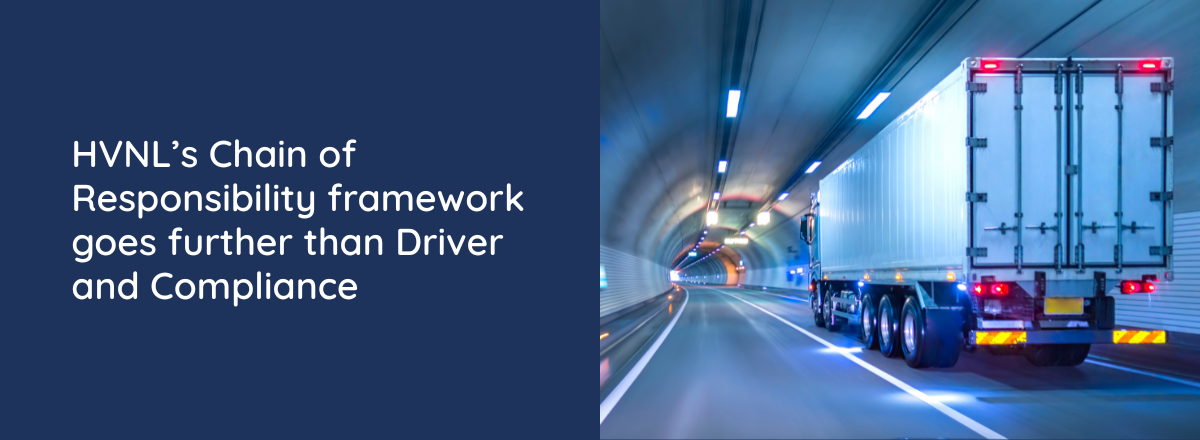
A key Chain of Responsibility (CoR) myth is that it only applies to drivers and transport companies. Actually, CoR extends liability to all parties in the supply chain who can influence, or have control, over a heavy vehicle’s journey, including producers, schedulers, and even directors. Another myth is that CoR is just about compliance. No, it is a system for promoting overall safety through shared responsibility and risk management. Table 1 dispels several Chain of Responsibility misconceptions.
Table 1 – Chain of Responsibility misconceptions
| Myth | Fact |
|---|---|
| CoR only holds drivers and transport companies responsible for heavy vehicle safety. | Liability extends to anyone in the supply chain who can influence a heavy vehicle’s journey, including businesses that use transport services and their directors. |
| My company is not responsible because we outsource transport. | Outsourcing does not remove your responsibility; you are still accountable for the risks associated with the transport activity you are arranging. |
| CoR is only about checking if a driver is compliant with the law. | CoR is about ensuring overall safety and risk management. It requires all parties have a primary duty to take reasonably practicable steps to ensure their actions don’t cause or contribute to breaches, such as ensuring schedules don’t cause fatigue or speeding. |
| My company is not involved in the physical transport, so CoR doesn’t apply to us. | CoR applies to anyone who is a “Person Conducting a Business or Undertaking” (PCBU) and has heavy vehicles on or visiting their site. |
| The “Load Restraint Guide” contains all the rules for load restraint. | The guide provides examples, but understanding a party’s specific role, influence, and control is key to fulfilling their responsibilities under the law. |